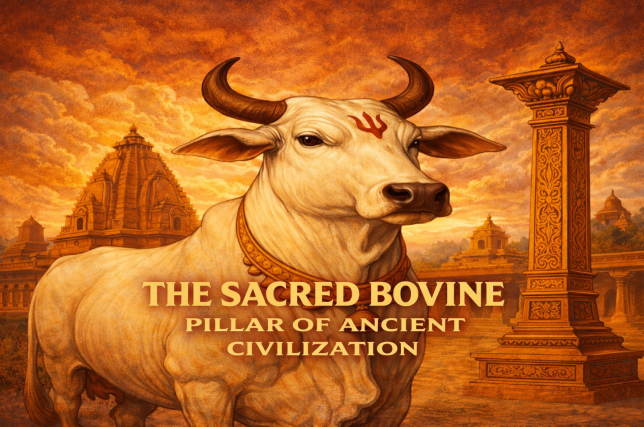
The Farmer’s Instructions (ETCSL 5.6.3; Civil 1994, p. 668 in The Oxford Handbook of Cuneiform Culture) and The Song of the Ploughing Oxen (ETCSL 5.5.5) are two examples I often cite. Many people have heard or read something I’ve referenced called the ETCSL, and some already know exactly what it is. But there are always others who have no idea what “ETCSL” means.
For clarity, ETCSL stands for the Electronic Text Corpus of Sumerian Literature, a scholarly digital project from the University of Oxford that catalogs, translates, and organizes authentic Sumerian texts. It’s one of the most reliable, accessible sources for studying original Sumerian literature.
The Farmers Almanac
Samuel Noah Kramer is quoted in countless books on Sumerian history, and his work forms the backbone of what we actually know about the Sumerians. Yet creators like Billy Carson and Giorgio A. Tsoukalos are heavily influenced by Zecharia Sitchin, and most of the YouTubers or content creators I’ve encountered repeat what Carson and Tsoukalos say about the Anunnaki, which is ultimately based on Sitchin’s interpretations of what the tablets supposedly say.
What really gets me is this: Sitchin, Carson, and Tsoukalos all know about scholars like Samuel Noah Kramer, George Smith, Andrew George, and many others who have already translated these texts accurately. And because I’m aware that they know these sources exist, I genuinely do not understand how they continue to go against the established translations and verifiable linguistic evidence. When I say ‘verifiable,’ everyone reading this is free to visit The CDLI Collection on the Cuneiform Digital Library Initiative website, cdli.earth. You can see the cuneiform tablets for yourself, learn the language, and translate them. But because Samuel Noah Kramer is so popular among academics, many of them cite his book as a reference. Of course, Andrew George and George Smith are also mentioned, but Samuel Noah Kramer is that guy.

From Samuel Noah Kramer himself, from his book, ‘History Begins at Sumer: Thirty-nine Firsts In Recorded History,’ “A small clay tablet discovered by an American expedition in Iraq made possible the restoration of a document more than 3,500 years old that is of prime importance in the history of agriculture and its techniques. The 1949-50 expedition, sponsored jointly by the Oriental Institute of the University of Chicago and the University Museum of the University of Pennsylvania, excavated the 3-by-4 1/2-inch inscription at the ancient Sumerian site of Nippur. The tablet arrived in poor condition. But after it had been baked, cleaned, and mended in the laboratory of the University Museum, practically its entire text became legible. Before the discovery at Nippur, eight other clay tablets and fragments inscribed with different parts of this agricultural “primer” were already known, but it was impossible to make a trustworthy restoration of the text as a whole until the new Nippur piece, with thirty-five lines from the middle of the composition, came to light.”
Basically, this means there was already a type of ‘Farmers’ Almanac,’ but the tablet was so deteriorated that the contents could not be fully understood.
The Second Representation of a god, the Cattle
Bulls play a completely different role in agriculture than oxen. A bull is an intact adult male cattle, which means it still produces testosterone. That hormone makes bulls naturally more aggressive, dominant, and territorial. They are powerful animals with strong mating instincts and are known to challenge anything they see as a rival. Because of this behavior, bulls are not suitable for plowing fields or pulling heavy equipment. Handling them in a work setting is dangerous, unpredictable, and inefficient.

The ox became the primary cattle used for tilling the earth because it is calm, steady, and easy to train. An ox and a bull are the same species, but the ox is a bull that was castrated early in life, which removes aggression and makes it well-suited for agricultural work. What this tells us is that, before castration became common practice, early farmers would have naturally used bulls for labor simply because they were the strongest male animals available. The difficulty and danger of working with bulls led people to develop castration, which transformed bulls into reliable oxen and created the foundation of traditional agricultural work.
Then there’s the female calf, a calf is a young cow: a female calf grows into a heifer and after her first calf she is called a cow, while a male calf grows into a bull if left intact or becomes a steer if castrated and may later be called an ox if trained for work, and cows and bulls mate to produce calves.
These animals produce manure that creates the perfect environment for certain wild mushrooms to grow. Some of these mushrooms contained natural compounds that could induce hallucinations when eaten. Species such as Psilocybe cubensis, Panaeolus cyanescens, and Panaeolus tropicalis were found to vary across regions and climates. Any civilization that practiced agriculture would have been familiar with these animals, whether they raised them directly or traded with those who did, so you better believe they would have known about the mushrooms.

Dreams, Mushrooms, and Sky Gods: The Ancient Origins of Vision
I’ve read the Bible many times, along with at least 10 different versions. One word that stands out to me personally is “vision.” When I look up the etymology of the word vision, I learn that it means: vision(n.) c. 1300, visioun, that which is seen, specifically “something seen in the imagination or in the supernatural by one sleeping or waking.
Basically, whenever you’re sleeping, napping, meditating, fasting, or even staying up for long periods of time, your mind can slip into altered states that some people would describe as vision-like.
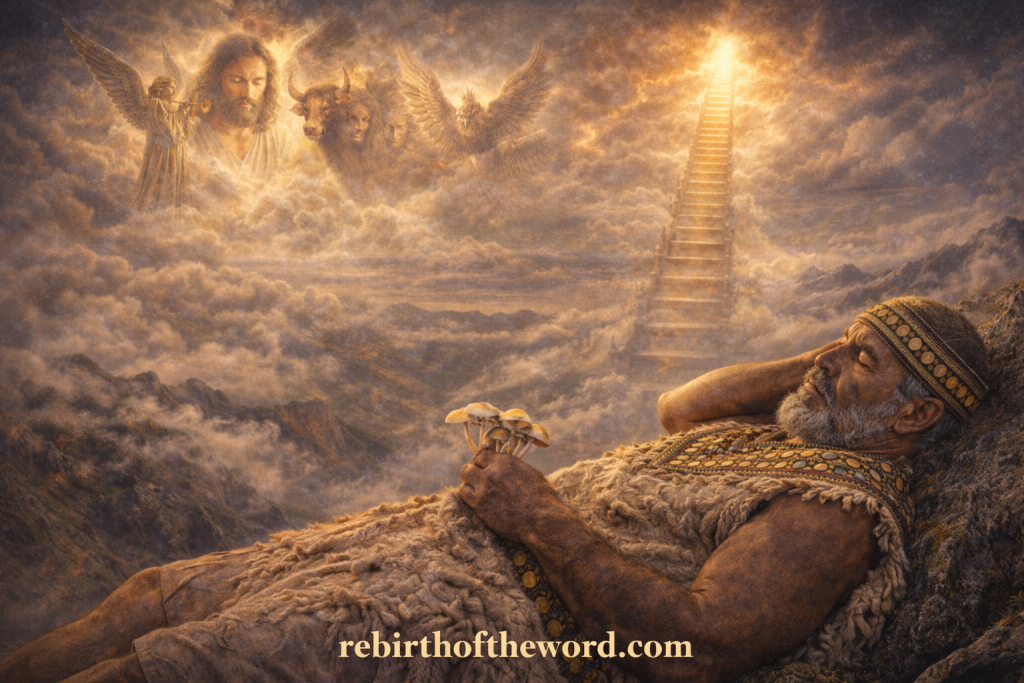
However, if someone wanted to have visions without fasting, meditating, or going without sleep, they could use certain mushroom species, such as Psilocybe cubensis, Panaeolus cyanescens, or Panaeolus tropicalis.
This led me to a bigger question. After reading the Bible, the Popol Vuh, Mesopotamian texts, Yoruba traditions, and many other belief systems, I noticed that nearly all of them mention forms of vision or spiritual insight. That curiosity pushed me to study the role of cattle, which were often revered as divine beings or sacred symbols. Through animal worship and agricultural reliance, cattle became central to early human civilizations and played an essential part in shaping religious understanding.
Even in 2025, there are still cultures where cattle are viewed as sacred and deeply connected to the divine. In India, cows hold a powerful spiritual status and are honored as symbols of life and purity. Among the Maasai of Kenya and Tanzania, cattle are believed to be a gift from the creator, Enkai, and form the foundation of their cultural and spiritual identity.
Enkai, also known as Ngai, is the Supreme God in the Maasai tradition of Kenya and Tanzania. Enkai is understood as the creator, the source of life, and the divine presence who governs the sky, the rain, and the rhythms of nature. In many teachings, Enkai is beyond gender and appears in two distinct forms that reflect the balance of life.

The first form is Enkai Narok, the Black God, who brings rain, blessings, and fertility. This side of Enkai is associated with the dark clouds that signal life-giving storms. The second form is Enkai Nanyokie, the Red God, associated with lightning, drought, and the harsher forces of nature. The red sky or red-tinted clouds are seen as signs of Enkai’s more severe presence.

In Maasai belief, Enkai played a central role in shaping their culture by sending all cattle down from the sky. These animals were lowered to earth through a sacred tree or a rope, becoming a divine gift specifically given to the Maasai people. Because of this, cattle are not just livestock in Maasai society. They are a spiritual inheritance, a sign of Enkai’s favor, and the foundation of their identity and survival.
Enkai is also closely linked to the natural world. Rain is viewed as a direct blessing from Enkai, while drought reflects a withdrawal or displeasure. This connection between divine will and weather shapes the Maasai relationship with their environment, especially since cattle depend on rain to thrive.
Enkai’s earthly home is believed to be Ol Doinyo Lengai, the Mountain of God, an active volcano in northern Tanzania. This mountain holds deep spiritual importance and stands as a physical symbol of Enkai’s presence in the world.

Through all of this, Enkai remains one of the most important sky gods still honored in living tradition. Enkai’s roles as creator, rain giver, and source of cattle form a powerful spiritual framework that continues to guide Maasai life today.
Across the many civilizations I’ve studied, there is always a god connected to fertility, agriculture, rain, and even floods. These societies depended on constant labor, toiling the earth from sunrise to sunset, and their livestock required continuous protection from danger. With such demanding lives, people often have little time to meditate, rest, or even get a whole night’s sleep. Because visions were deeply personal and rarely identical from one person to another, it makes sense that these communities would eventually turn to certain mushrooms once they discovered their effects. After learning what these mushrooms could do, they would naturally become a tool for accessing altered states and spiritual insight.
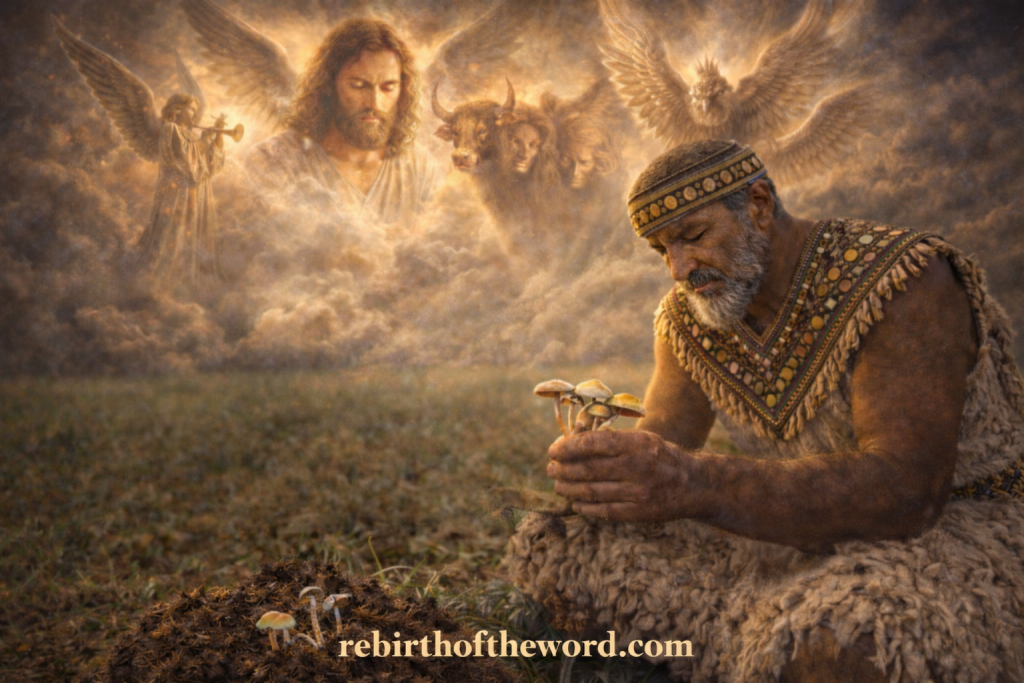
A tool in the bag that helped humans make use of their third eye. These cattle became the anthropomorphic deities connected to agriculture and the needs of early civilizations.
Until next time, Knowledge is Power



Pingback: National and Ethnic Animal Symbols